 ISMS Copilot
Top 10 GRC Platforms with AI Reporting Features
AI-powered GRC platforms cut manual compliance work with automated evidence, cross-framework mapping, and faster audit reporting.

Top 10 GRC Platforms with AI Reporting Features
Governance, Risk, and Compliance (GRC) platforms help organizations manage risks, meet compliance standards, and streamline audits. The best platforms now integrate AI to automate evidence collection, monitor controls, and generate reports quickly. This saves time, reduces costs, and improves efficiency. Here's a quick overview of the top GRC platforms with AI reporting capabilities:
- Hyperproof: Supports 142 frameworks, automates evidence collection, and reduces duplicate controls by 66%.
- MetricStream: AI-driven risk analytics, maps 9,300 IT controls to 1,200 regulations, and cuts control tests by 30%.
- Riskonnect: Offers real-time regulatory mapping and Monte Carlo simulations for risk predictions.
- OneTrust: Maps evidence across 55+ frameworks and uses AI to scan documents and fill compliance forms.
- RSA Archer: Tracks 2,000+ global regulations and automates third-party risk assessments.
- Diligent HighBond: Reduces audit times by 70% and integrates with 100+ tools.
- NAVEX: Monitors 8,000 global sources for regulatory updates and reduces false positives by 70%.
- LogicManager: Uses AI to link risks, controls, and policies, saving up to 50% of manual effort.
- SAP GRC: Automates regulatory insights and continuous control monitoring within the SAP ecosystem.
- Risk Cognizance: Uses AI to crosswalk frameworks, saving 72% of manual compliance tracking.
These platforms simplify multi-framework compliance, automate repetitive tasks, and offer AI-powered insights to enhance decision-making.
Quick Comparison
| Platform | AI Features | Framework Support | Key Benefit |
|---|---|---|---|
| Hyperproof | AI agents for audits and insights | 142 frameworks | Saves 350+ hours/year on audits |
| MetricStream | Predictive analytics, AI summaries | 1,200+ regulations | Reduces control tests by 30% |
| Riskonnect | Regulatory mapping, risk modeling | ISO, NIST, HIPAA, more | Cuts response times by 50% |
| OneTrust | AI document scanning, dashboards | 55+ frameworks | Boosts compliance productivity by 75% |
| RSA Archer | Regulatory tracking, AI assessments | 2,000+ global sources | Automates 96% of controls |
| Diligent | AuditAI, board-ready analytics | 75+ frameworks | Cuts audit times from months to weeks |
| NAVEX | AI compliance monitoring | 400+ regulations | 5.5x to 18x ROI for users |
| LogicManager | Risk analytics, document AI | 100+ solutions | Saves 50% of manual effort |
| SAP GRC | Regulatory insights, Delta Analysis | SAP + global standards | Cuts control costs by 40%-60% |
| Risk Cognizance | AI framework crosswalking | SOC 2, ISO, GDPR, more | Saves $250,000/year via automation |
These platforms cater to various needs, from enterprise-scale compliance to specific frameworks like SOC 2 or GDPR. They all focus on reducing manual work and improving compliance accuracy, making them essential for modern businesses.
::: @figure 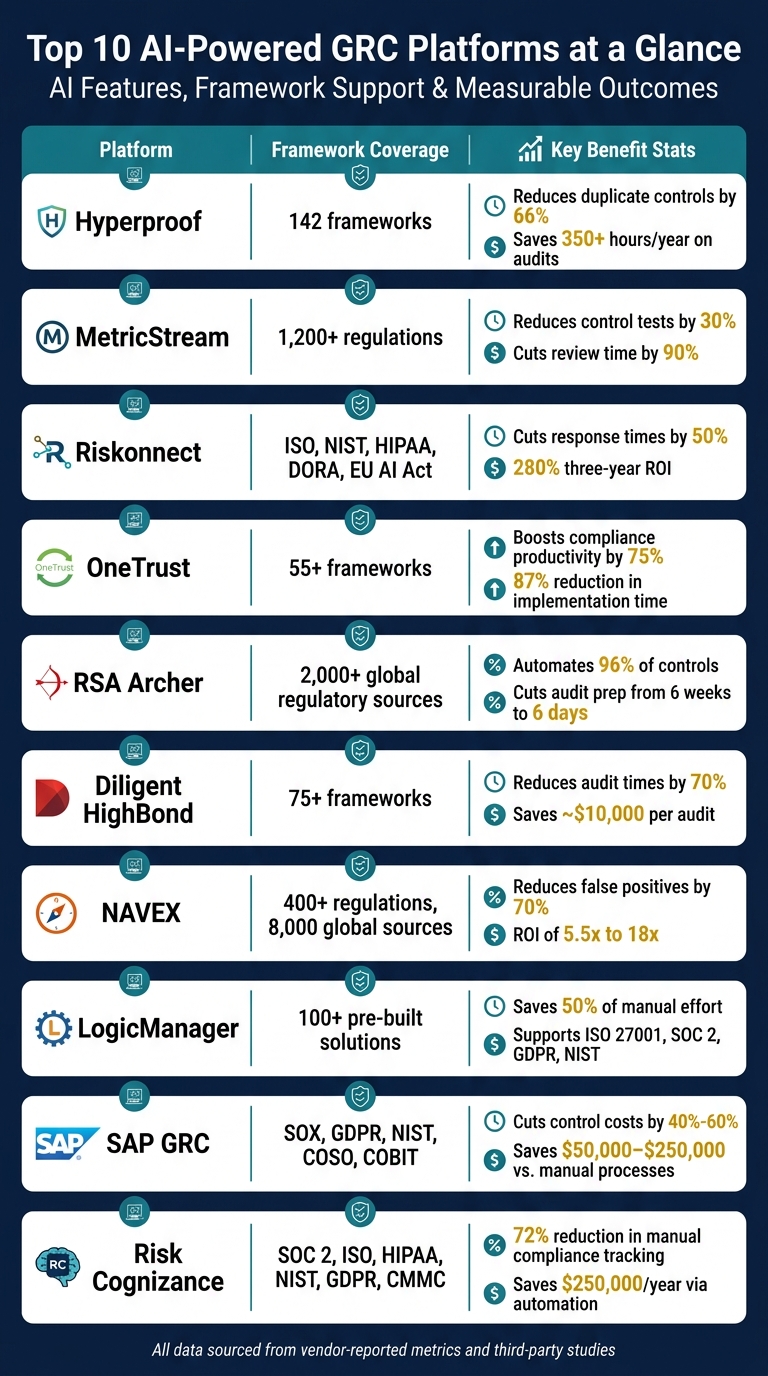 {Top 10 AI-Powered GRC Platforms Compared: Key Metrics & Benefits}
:::
{Top 10 AI-Powered GRC Platforms Compared: Key Metrics & Benefits}
:::
AI for GRC -- GRC Solution Walkthrough | SmartSuite
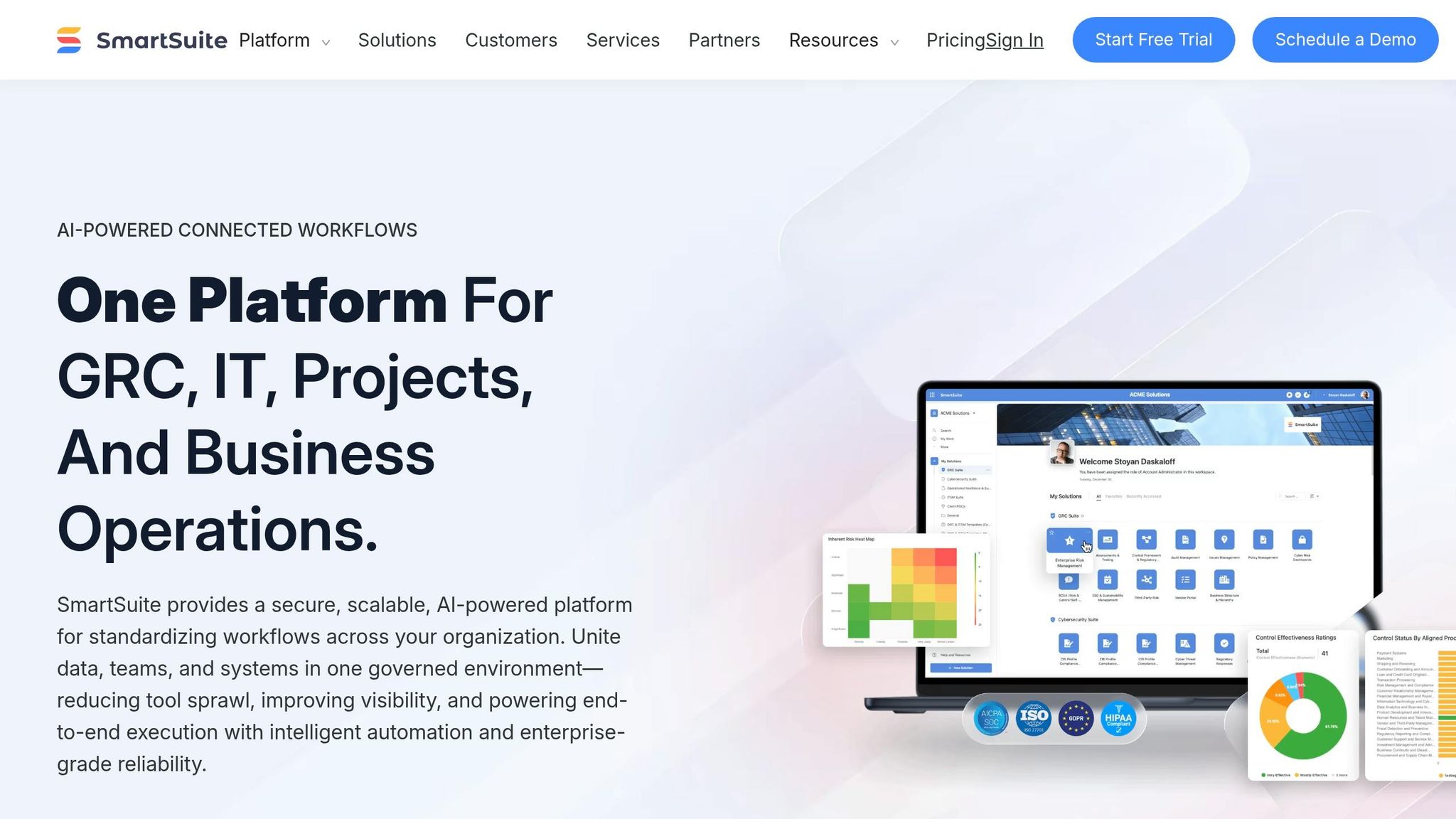
::: @iframe https://www.youtube.com/embed/kVDd7YcezOI :::
sbb-itb-4566332
1. Hyperproof
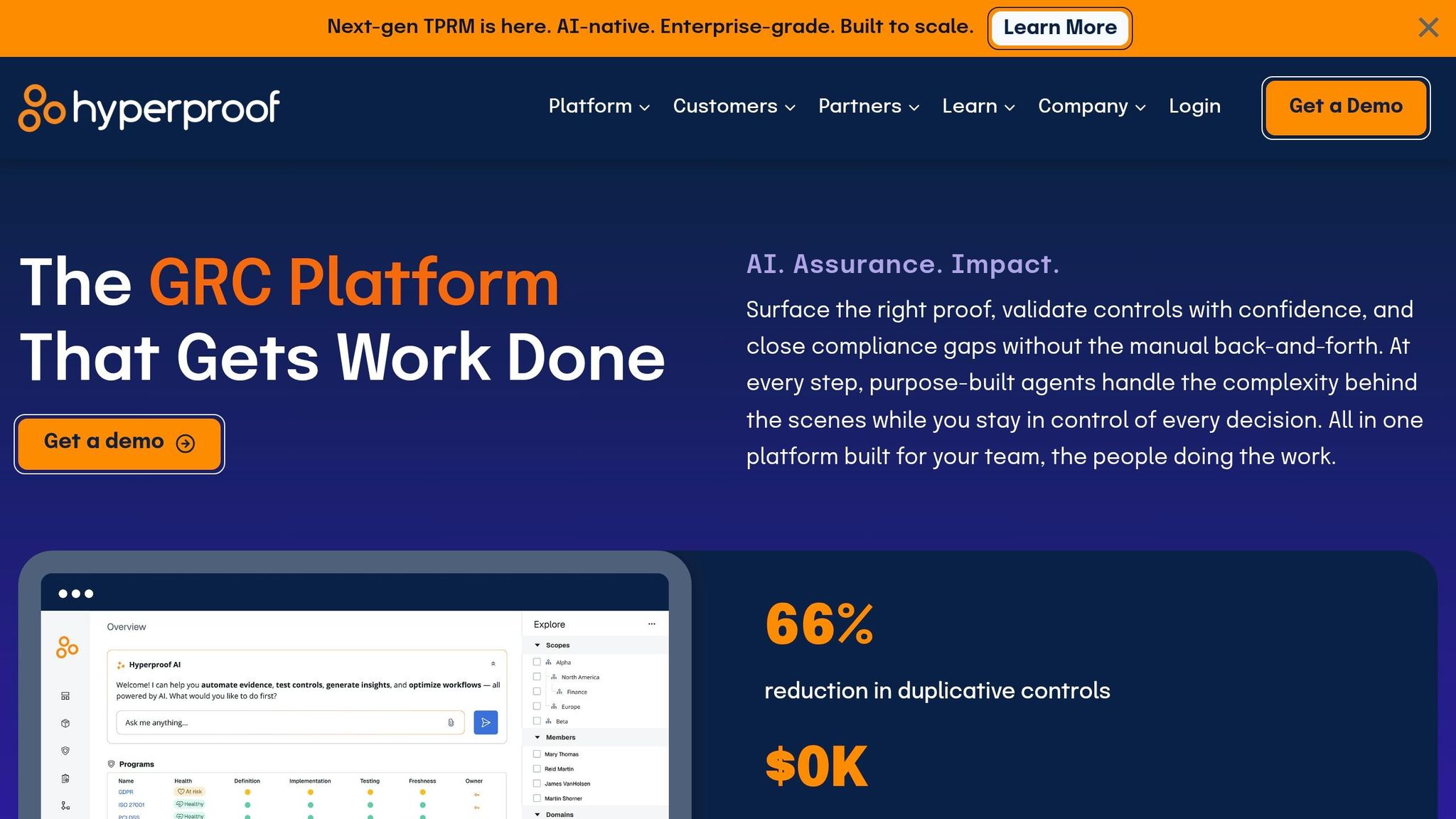
Hyperproof is designed for compliance teams juggling multiple frameworks at the same time. It supports 142 compliance frameworks, including heavyweights like SOC 2, ISO 27001:2022, NIST CSF 2.0, HIPAA, PCI DSS 4.0.1, FedRAMP, DORA, and the EU AI Act compliance [11][12]. What sets it apart is its "map once, reuse everywhere" strategy: a single control can address requirements across several frameworks. According to the company, this approach reduces duplicate controls by 66% [6].
In early 2026, Hyperproof introduced four specialized AI-driven agents: Navigator, Inspector, Co-Pilot, and Operator. These tools go beyond basic AI integrations, offering advanced features like identifying risks, validating control testing, recommending next steps, and managing remediation tasks. For example, users can ask plain-English questions like "Which controls don't have recent proof?" and get immediate visual charts and actionable insights [4][5]. This approach has redefined daily workflows for compliance teams.
"Compliance teams have always had the expertise to run great programs. What they have never had is enough hours in the day to do all the manual work those programs require. AI Guided Experiences are how we give that time back." - Alam Ali, SVP of Product, Hyperproof [7]
Hyperproof integrates seamlessly with platforms like AWS, Azure, Okta, GitHub, Jira, Slack, and Google Drive [8][10]. Evidence collected through these integrations is automatically time-stamped, mapped to the appropriate controls, and validated before auditors even get involved. These capabilities save both time and money. For instance, John Thornton, Information Security Analyst at DigiCert, shared that Hyperproof saved him at least 80 hours of manual work across three audits by automating evidence collection and reporting [9].
Appian also leveraged Hyperproof to manage 28 compliance frameworks and maintain over 600 controls, resulting in savings of around $100,000 per audit [6]. Across its user base, Hyperproof reports a 70% boost in compliance productivity and over 350 hours saved annually on audit preparation [6]. However, the platform does come with a few challenges, such as pricing transparency (details require direct contact) and a relatively longer onboarding process of 3–5 weeks compared to simpler tools [4]. Despite these trade-offs, Hyperproof stands out as a leader in AI-powered compliance solutions, delivering measurable results for its users.
2. MetricStream
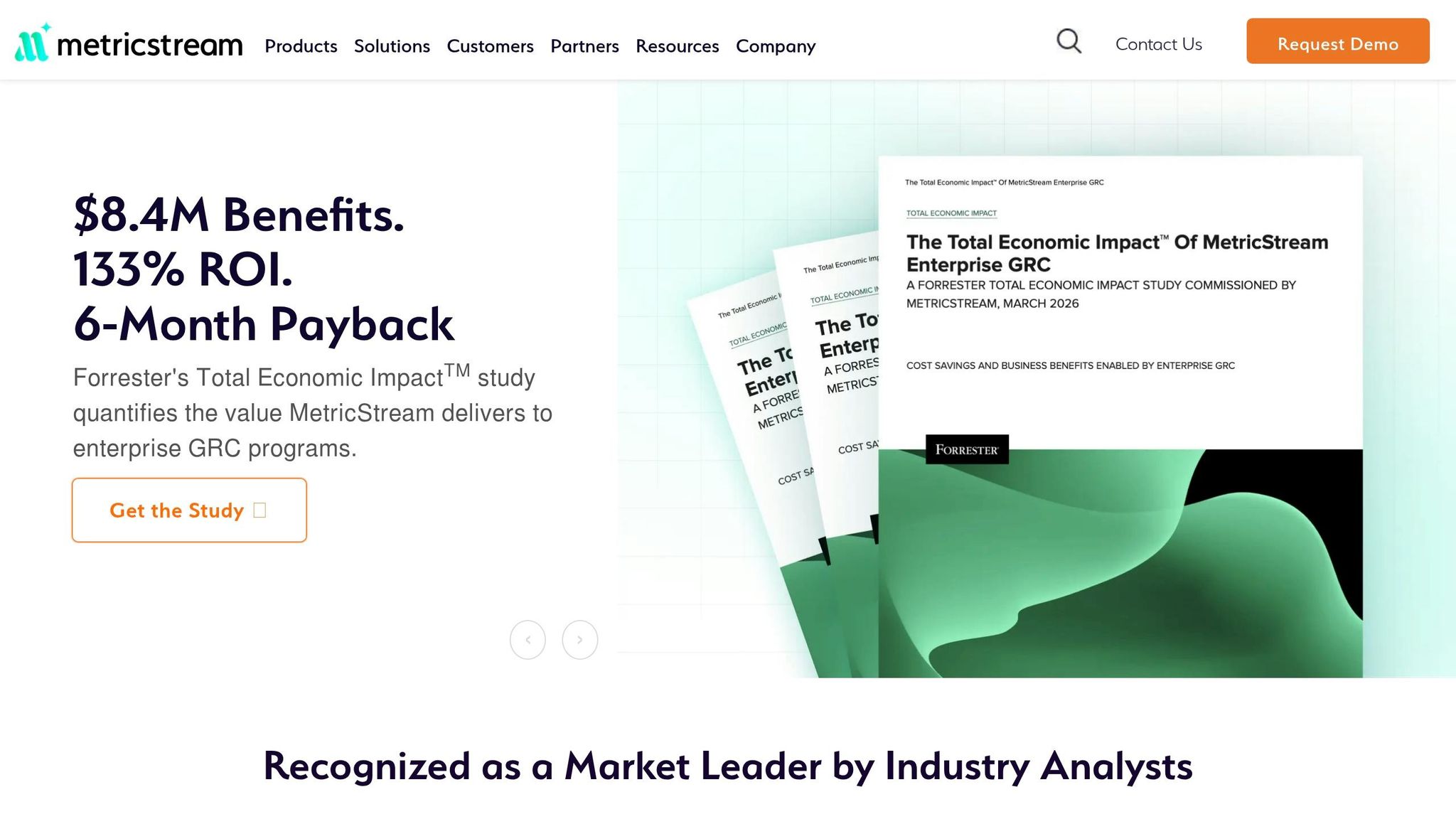
MetricStream leverages its AiSPIRE engine, combining large language models (LLMs) with ontological knowledge to enhance governance, risk, and compliance (GRC) processes. AiSPIRE works to identify control gaps, flag duplicate risks, and recommend the safe removal of redundant controls. This approach has helped organizations achieve a 30% reduction in total controls and control tests [16].
The platform supports a wide range of frameworks, including SOX, GDPR, HIPAA, PCI-DSS, DORA, NIST CSF, ISO 27001, COBIT, and COSO [1][14]. Its integration with the Unified Compliance Framework (UCF) is particularly noteworthy, mapping over 9,300 IT control statements to more than 1,200 regulations. This reduces duplicate evidence requests by 40% and boosts compliance and control monitoring coverage by 300% [13][14]. This efficiency is central to MetricStream's "Test Once, Comply with Many" philosophy:
"A single control that satisfies requirements in both ISO 27001 and NIST CSF, for example, needs to be tested only once, with results shared across both frameworks." - MetricStream [17]
MetricStream's AI-powered audit summarization feature streamlines review processes, cutting review time by 90% [1]. Additionally, the MetricStream Intelligence Engine automates key tasks like issue classification, remediation planning, and triaging frontline observations. By analyzing historical patterns and business context, it determines whether an observation should be logged as an incident or a loss event [15].
For managing third-party risk, MetricStream integrates seamlessly with BitSight and SecurityScorecard to provide real-time vendor intelligence. It also automates the extraction of content from SOC 2 and SOC 3 reports, ranking vendors by risk based on detected anomalies [1][15].
A standout feature of the platform is its cyber risk quantification capability, which uses the FAIR model to translate vulnerabilities into measurable financial exposure. This makes it easier for security teams to present actionable risk data to executives and boards, facilitating informed budget decisions [13].
MetricStream's impact is reflected in its recognition as a Leader in the IDC MarketScape 2025 Worldwide GRC Software Report. Trusted by over 1,000,000 professionals across 35+ countries, it continues to set the standard in GRC innovation [1][14].
3. Riskonnect
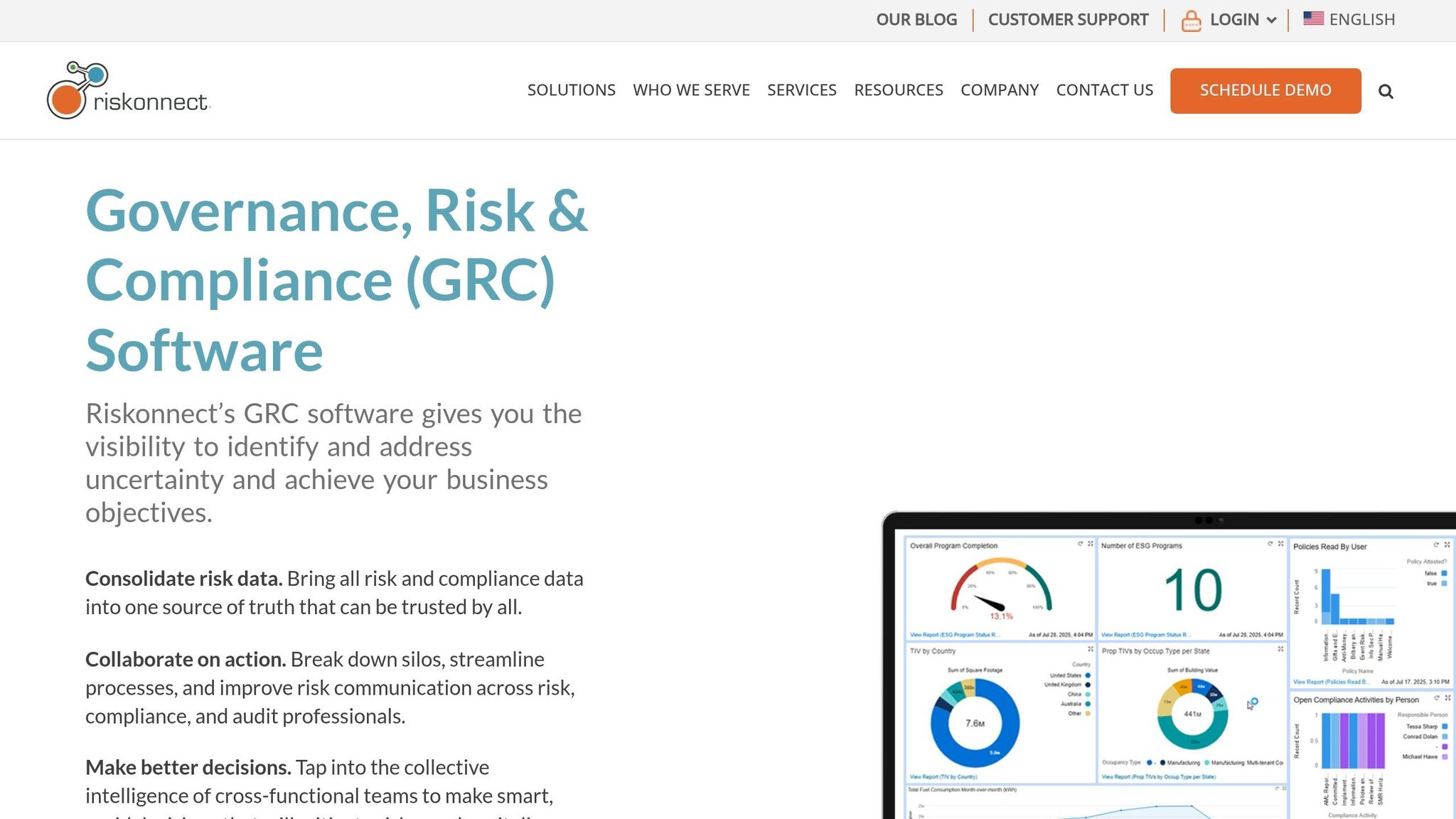
Unlike many GRC platforms that treat AI as an optional feature, Riskonnect integrates it directly into its core design. Its Intelligent Risk Framework seamlessly incorporates AI across GRC, Risk Management Information Systems (RMIS), and Business Continuity, creating a unified intelligence layer rather than an additional tool [19].
Riskonnect's edge lies in its deeply embedded AI capabilities. One standout feature is Agentic AI, which automates time-intensive tasks. For example, the Regulatory Mapping Agent keeps track of global regulatory changes in real time and automatically aligns new rules with relevant internal controls, policies, and obligations. Meanwhile, the Audit Coordination Agent takes charge of organizing audit requests, tracking evidence collection, and managing responses through a centralized workflow. This automation frees up teams to focus on deeper risk analysis [21].
The platform supports a broad range of frameworks, including ISO 27001, NIST CSF, SOX, HIPAA, DORA, and emerging ones like the EU AI Act and ISO 42001 [18][20]. With Riskonnect, a single assessment can address multiple frameworks at once, thanks to its ability to automatically map internal controls across different standards [21].
For executive reporting, Riskonnect employs Monte Carlo simulations to predict risk probabilities and financial impacts, transforming raw data into actionable insights for decision-makers. Integrations with tools like Microsoft Fabric, Power BI, OpenAI, and Salesforce Agentforce further enhance reporting by making it easier to visualize and share risk data across an organization [19].
In May 2026, Randstad adopted Riskonnect's Intelligent Risk Framework alongside Salesforce's Agentforce. Trey Braden, Director of Risk Management Technology and Information Systems at Randstad, shared:
"Agentforce has given us a practical way to bring AI directly into our Riskonnect workflows, where it can support users in context rather than sitting outside the system or requiring extensive technical plumbing." [19]
Riskonnect delivers impressive results, including a 280% three-year ROI, deployment times of under three months, and AI-assisted incident response that reduces response times by up to 50% [19][21].
4. OneTrust
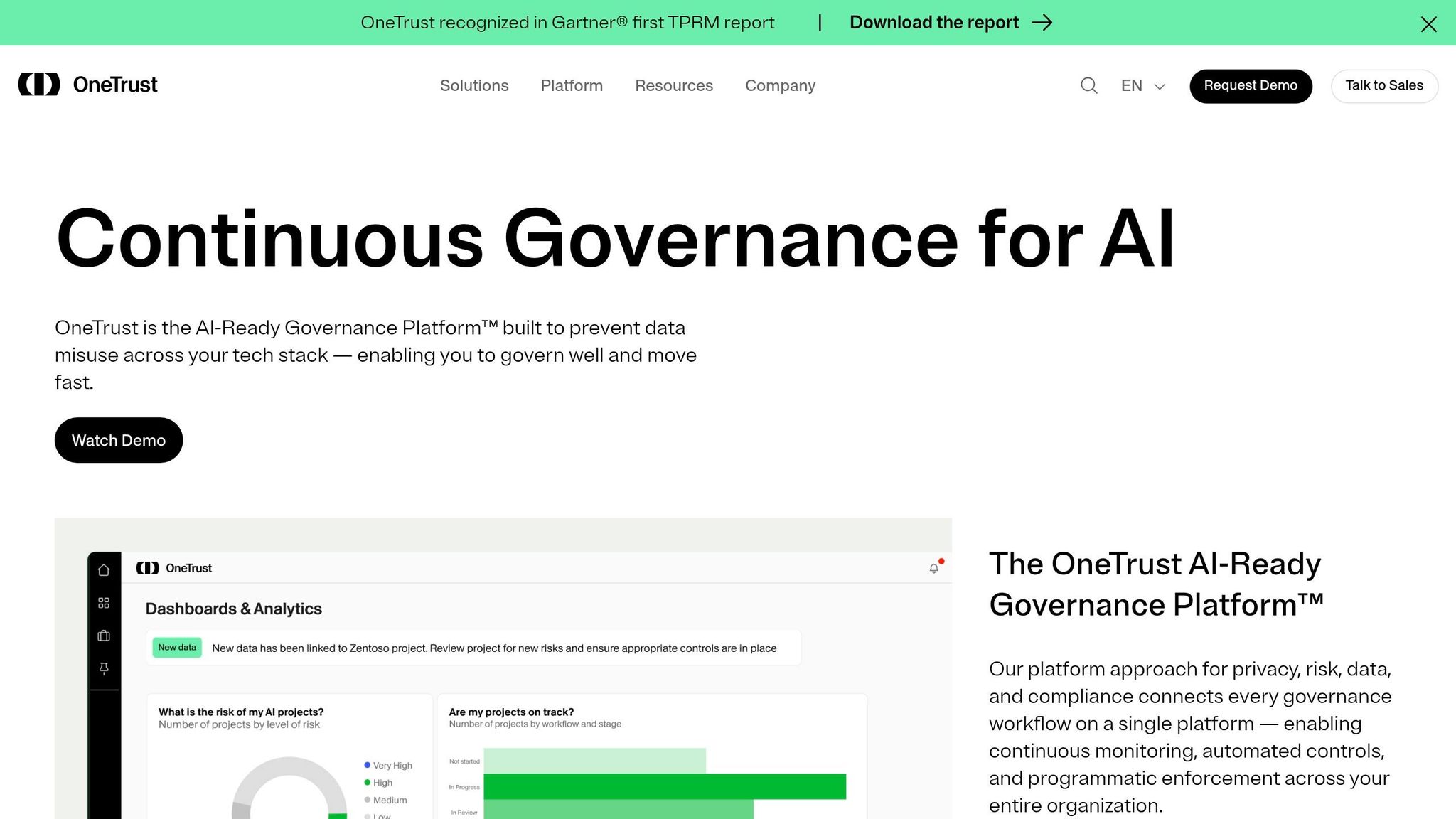
OneTrust employs a "collect once, comply many" strategy for compliance reporting. Its Shared Evidence Framework is designed to map a single piece of evidence to control requirements across more than 55 pre-built frameworks. These include standards like ISO 27001, SOC 2, GDPR, HIPAA, DORA, the EU AI Act, and NIST CSF 2.0 [25]. The idea is simple: gather evidence one time and use it to meet multiple framework requirements.
The platform’s AI capabilities are driven by OneTrust Copilot, an assistant that taps into the DataGuidance database, which is backed by 1,700 legal experts across 300 jurisdictions [23]. OneTrust also offers AI Document Scanning, a tool that scans contracts, security documents, and business plans to automatically fill out compliance questionnaires and risk assessments - addressing challenges in scaling GRC platforms by eliminating much of the manual data entry process [23]. A 2024 Forrester Consulting Total Economic Impact™ study found that organizations using OneTrust’s automation tools saw a 75% boost in productivity for privacy and compliance teams, along with an 87% reduction in the time needed to implement compliance initiatives [23]. These efficiencies don’t just save time - they also deliver measurable business outcomes.
The financial impact can be striking. In 2024, Adam Jaggers, CTO of XOI Technologies, shared how OneTrust helped his company achieve ISO compliance:
"Being able to achieve ISO compliance unlocked $6,000,000 in pipeline revenue for us. That's only just a few clients, but those were clients we literally could not have landed without the platform." [24]
OneTrust also stands out for its extensive system integrations. With over 500 pre-built system connectors and 200+ pre-built integrations, it works seamlessly with platforms like AWS GovCloud, Microsoft Azure Government, and Google Cloud Government. It also supports OT/ICS security tools like Claroty, Dragos, and Nozomi [25]. These integrations enable real-time evidence collection, moving beyond static, point-in-time snapshots to continuous compliance monitoring - a game-changer for many organizations.
In May 2025, OneTrust introduced multi-scope enhancements that allow businesses to target compliance efforts on specific regional inventories or critical assets. Trey Hecht, Director of Product Management at OneTrust, explained:
"Our new multi-scope capabilities take scoping beyond just framework applicability to keep up with business variables. With our prescriptive, guided scoping engine, OneTrust automates framework compliance in context to business operations." [26]
The platform’s advancements have not gone unnoticed. The IDC MarketScape named OneTrust a Leader in its 2025 Worldwide Financial GRC Software report, praising its seamless integration of machine learning and AI to strengthen governance, risk, and compliance across organizations [22].
5. RSA Archer
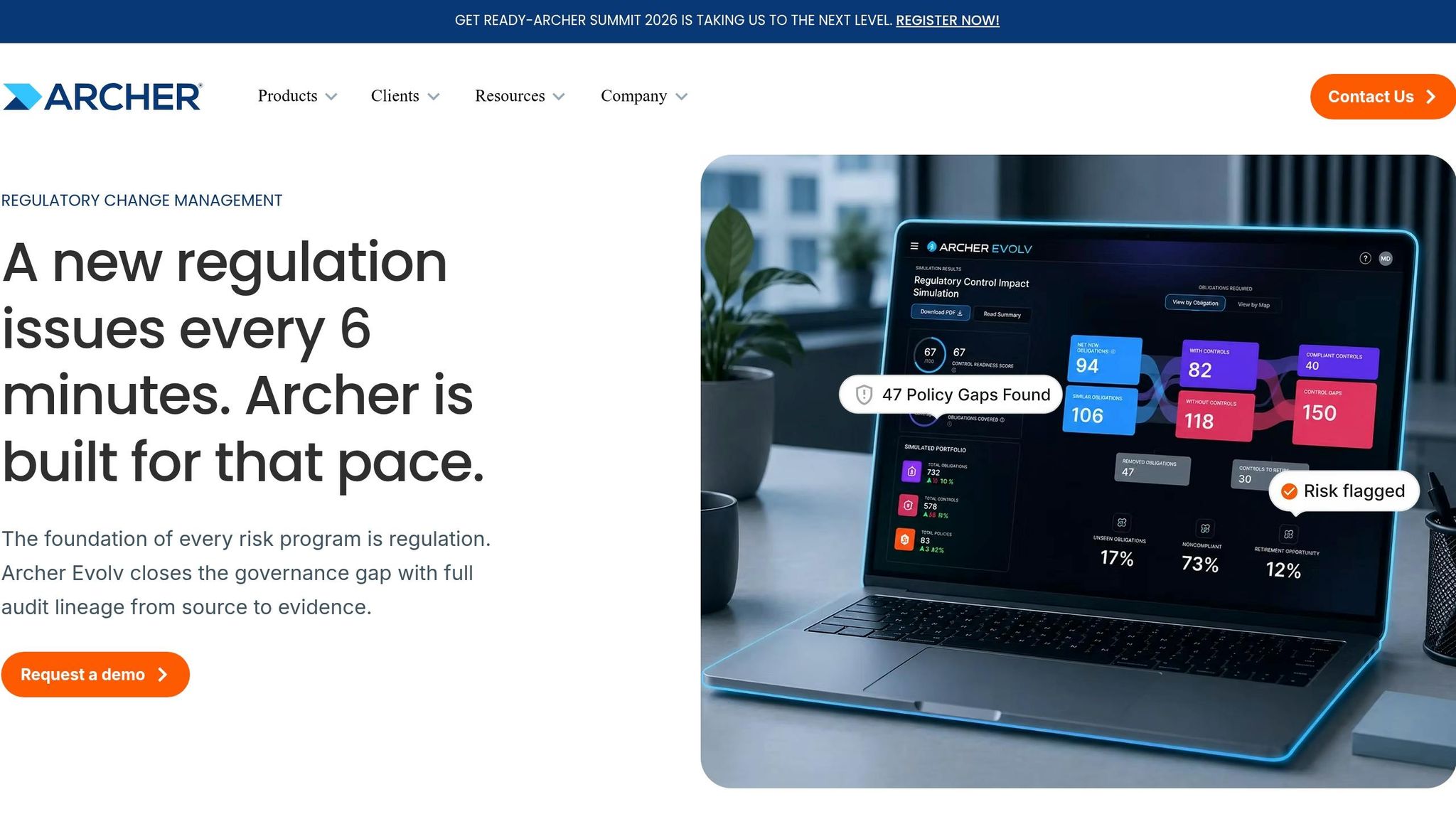
RSA Archer builds on its extensive enterprise GRC experience through Archer Assurance AI, a tool designed to streamline compliance processes. This AI-driven engine maps regulatory updates to internal controls, identifies gaps and conflicts, and generates controls to address compliance shortfalls [27]. Impressively, it draws from over 2,000 regulatory sources across 80+ countries in 99 languages, with automatic translation available for 27 of them. On top of that, approximately 60 new sources are added each month to keep the system current [27]. This extensive database enables Archer to support a wide range of compliance standards effectively.
Archer’s framework coverage spans key standards like NIST CSF, ISO 27001, SOC 2, GDPR, PCI DSS, HIPAA, COBIT, the EU AI Act, and CSRD, among others [27][28]. Its ability to allow a single control to satisfy multiple frameworks adds to its efficiency [28]. The Verdantix Green Quadrant: GRC Software 2025 report awarded Archer the highest possible score in regulatory change management, with analyst Katelyn Johnson stating:
"Verdantix's analysis found that Archer's AI-driven approach to regulatory change management delivers measurable improvements in compliance accuracy and responsiveness." [31]
Archer Engage further simplifies processes by using generative AI to auto-fill third-party risk assessments. Plus, its integrations with over 200 security tools - including Splunk, Tenable, CrowdStrike, Okta, AWS, Azure, and ServiceNow - make evidence collection and audit preparation much more efficient [27][29]. For example, a global fintech company that paired Archer with Trustero's AI platform automated daily evidence collection for 96% of its controls, cutting audit prep time from six weeks to just six days and reducing auditor follow-ups by 40% [30].
However, Archer’s advanced features come with some challenges. With a median annual cost of approximately $850,000 for large enterprises and implementation timelines ranging from 6 to 18 months, it is best suited for highly complex and regulated environments [29]. On G2, Archer holds a 3.9/5 rating based on 780 reviews. Users appreciate its depth and configurability but often mention its outdated user interface and slower pace of modernization as areas for improvement [29].
6. Diligent HighBond
Diligent HighBond brings together board management, audit, and compliance efforts into a single, cohesive GRC (Governance, Risk, and Compliance) platform. One standout feature is its AI-powered tool, AuditAI, which automates evidence collection and follow-ups. This tool significantly reduces request times by 70%, translating to about $10,000 in savings per audit [36]. These capabilities make handling compliance across multiple frameworks more efficient, offering a strong foundation for developing detailed control strategies.
The platform's controls framework is another key feature, supporting more than 75 regulatory standards like NIST, FedRAMP, SOC 2, and AI assistant for ISO 27001. Its "build once, certify many" approach minimizes repetitive control testing. Additionally, an AI Suggestion Service identifies existing controls that align with new requirements, and an AI version comparison tool categorizes updates by severity - Significant, Moderate, or Minor - helping teams prioritize their efforts effectively [35].
Users have reported dramatic time savings. For example, Sumit Pal from Ooma Inc. reduced compliance tasks from three weeks to just four hours. Similarly, Jewell Freeman, Chief Audit Executive at the Louisiana Department of Corrections, noted that audit durations dropped from 11 months to just one month [32][33].
"Audits that used to take 11 months to do - we can do that in a month now. We run over 30 analytics with the push of a button. completed in minutes." [33]
Diligent HighBond integrates seamlessly with over 100 third-party data providers, including HRIS, ERP, and CRM systems. Its FedRAMP and DoD IL-5 authorizations further highlight its suitability for federal contractors and government agencies. The platform has earned a 4.4/5 rating on G2 and has been recognized as a Leader by Gartner, Forrester, IDC, Chartis, and Verdantix [34].
7. NAVEX
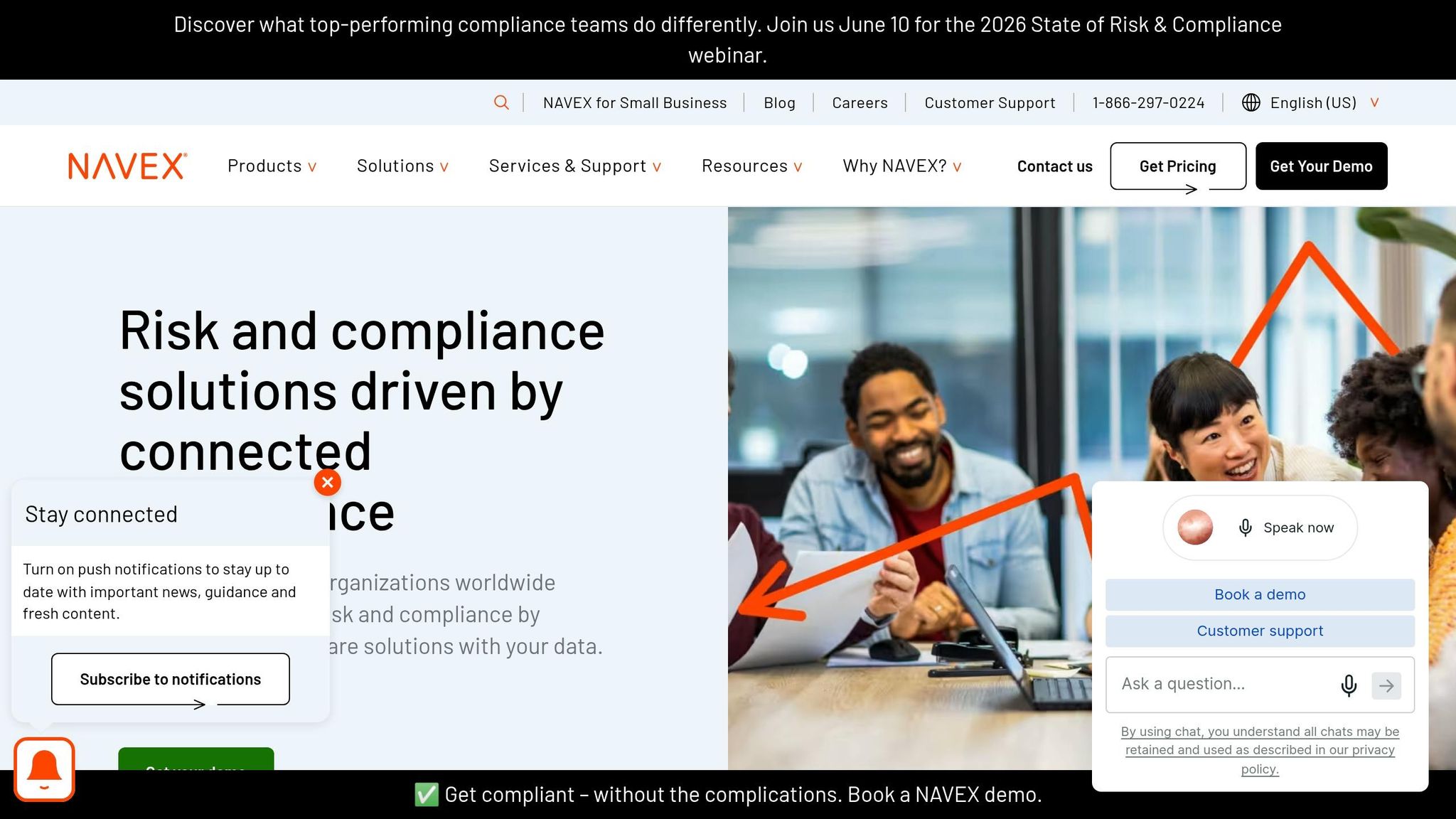
NAVEX takes governance, risk, and compliance (GRC) to the next level with its NAVEX One platform, which supports over 400 regulations and frameworks worldwide [37]. By integrating AI into everyday tasks, the platform simplifies complex processes like summarizing policy changes, classifying incidents, and reducing false positives during due diligence. Impressively, NAVEX's AI screening cuts false positives by 70%, significantly reducing the time spent on manual reviews [37]. Its automation capabilities also extend to managing regulatory updates dynamically, ensuring organizations stay compliant without constant manual intervention. For those specifically targeting ISO 27001, using an AI ISO 27001 implementation assistant can further accelerate the certification process.
One standout feature is its regulatory change management engine, which monitors over 8,000 global sources. This tool automatically tracks regulatory changes, maps them to existing controls, and flags potential issues [37][39]. This means teams can keep audit trails up to date without having to rebuild them - a feature that distinguishes NAVEX from other GRC platforms.
On the reporting front, GRC Insights dashboards leverage AI to conduct root-cause analysis and identify trends that might otherwise go unnoticed in raw data [40][42]. Built on Power BI, these dashboards allow users to clone reports while retaining filters, making it easy to share insights across departments [40]. NAVEX also integrates seamlessly with major enterprise systems, enhancing its functionality and ease of use.
"The tremendous value in having everything in one place is transparency. There's no scavenger hunt and NAVEX provides a one-stop shop where everything is there and easy to access." - General Barrye Price, President and CEO, CADCA [38]
NAVEX connects with ERP, CRM, and HRIS systems through APIs and supports Single Sign-On (SSO) for streamlined employee access [41][42][43]. With over 13,000 customers globally, including 77% of Fortune 100 and 500 companies [37][38], NAVEX delivers measurable returns. For smaller businesses using the Compliance Professional package, the ROI can reach 5.5x, while larger organizations with 6,000+ employees may see returns as high as 18x [41].
8. LogicManager
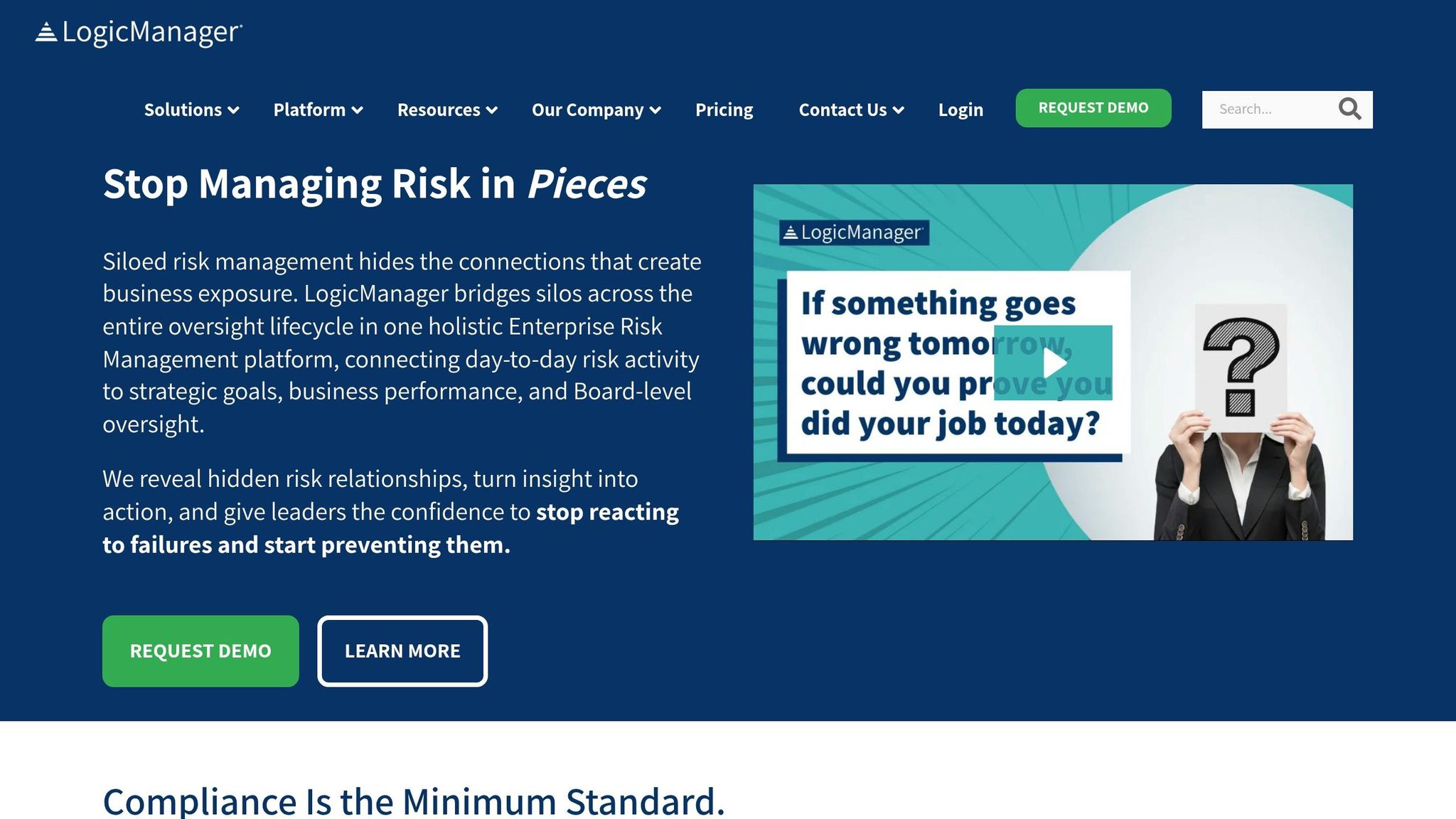
LogicManager takes a unique stance with its "intentional AI" philosophy, emphasizing that AI should assist risk professionals rather than replace them. This approach ensures human oversight remains central, influencing every feature, from evidence collection to identifying hidden risk relationships across departments [46].
One standout feature is the One-Click Compliance AI, which automatically scans your organization's controls, policies, and procedures whenever a new framework is introduced. This eliminates the need for tedious manual cross-referencing. The platform comes equipped with over 100 pre-built solution packages, supporting frameworks like ISO 27001, SOC 2, PCI DSS, NIST 800-53, GDPR, CCPA, and Basel [44].
Another key tool, Risk Ripple Analytics, uses a nodal matrix to map out interdependencies between people, risks, controls, and processes [47]. Combined with Insight Workbenches, teams can visualize these connections dynamically, making them easier to act upon.
LogicManager also simplifies evidence collection by automating readiness assessments, linking responses to controls, and logging evidence. Its Document Analyzer, powered by LogicManager Expert (LMX) - a GPT-4-based AI advisor - extracts critical details like key terms, review dates, and policy owners from documents such as SOC reports and vendor contracts. This tool not only triggers relevant workflows but also improves compliance reporting accuracy. LogicManager estimates that LMX helps risk professionals save up to 50% of their time by reducing repetitive manual tasks [48].
To further enhance its capabilities, LogicManager integrates with Compliance.ai for financial regulatory content and can pull external data - such as vendor ratings, security metrics, KRIs, and KPIs - from nearly any third-party tool. This enriches reports and provides deeper insights for risk scoring [45].
"Service is #1! Knowledgeable, professional, helpful and responsive Advisory Analyst! The program's continual user input and upgrades are a key strength." - Assistant Vice President | Risk Management, Pacific Guardian Life [44]
9. SAP GRC
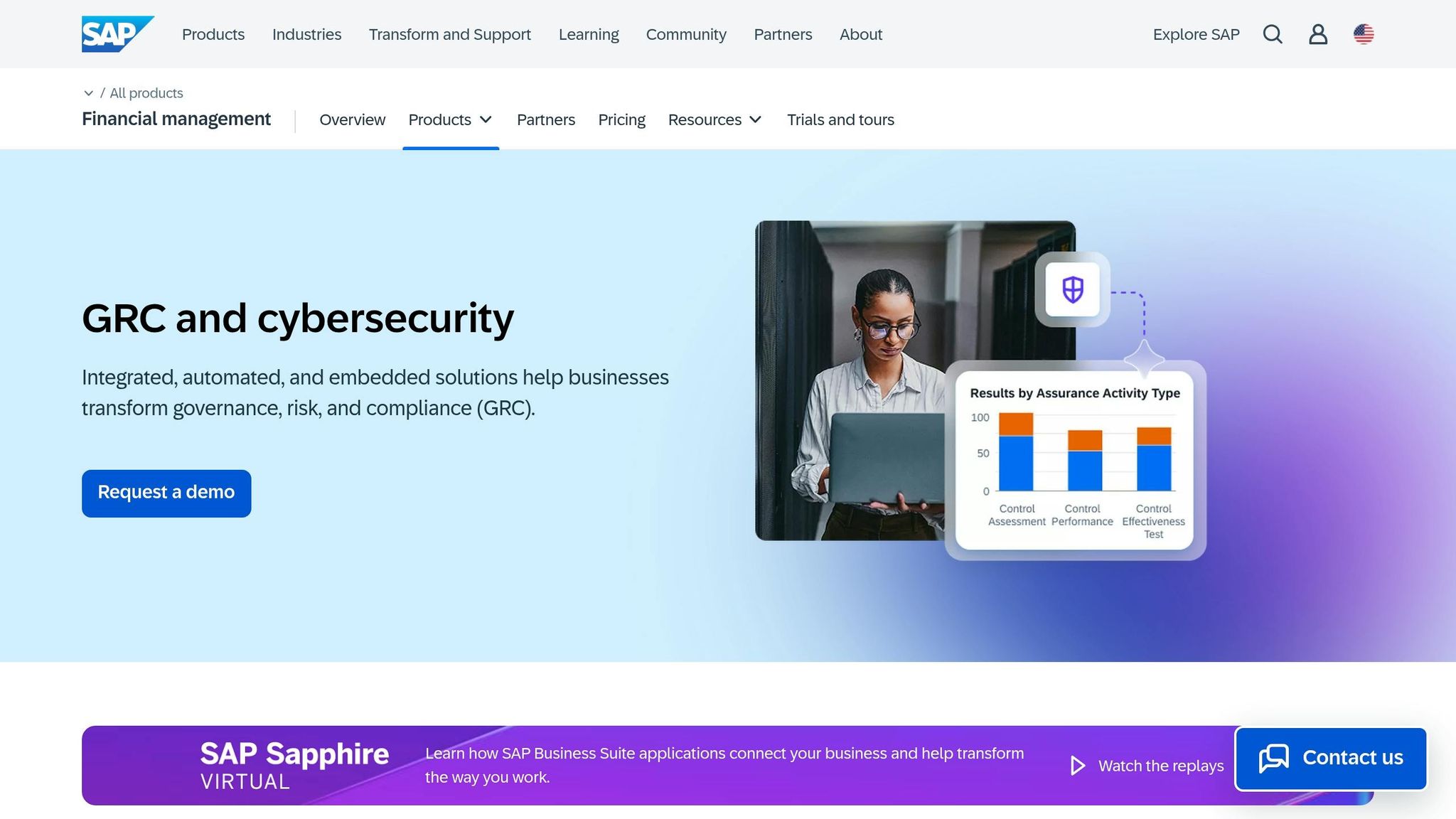
SAP GRC simplifies enterprise compliance by incorporating AI into its core functions. One of its standout features is SAP Regulatory Insights, a service powered by the SAP Business Technology Platform (BTP). Using natural language processing and large language models, this tool can automatically analyze regulatory documents, extract control definitions, and recommend updates to internal control frameworks [49][50]. Considering there are over 300 regulatory changes happening daily [49], automation like this is more than helpful - it's essential.
Another key feature is Delta Analysis, which quickly identifies differences between versions of regulatory frameworks (e.g., NIST 800-53 Rev. 4 vs. Rev. 5) [50]. Jennifer Shen, an Internal Auditor, highlighted its impact:
"What took days of manual review now takes seconds." [50]
Looking ahead to 2026, SAP GRC will introduce Joule, a generative AI assistant designed to make compliance management even easier. Joule allows users to create monitoring rules using plain English commands - no coding required. For example, you could simply state, "Monitor purchase orders over $10,000 where approver equals creator", and the system would handle the rest [51]. This innovation empowers process owners, who previously depended on technical developers, to build their own rules. Additionally, the platform’s Continuous Control Monitoring (CCM) evaluates 100% of transaction data in real time, potentially lowering control testing costs by 40% to 60% [51].
SAP GRC also integrates seamlessly across hybrid environments through the SAP Integration Suite, pulling evidence from systems like SAP S/4HANA, SuccessFactors, Salesforce, and Workday [51]. For cybersecurity, it connects with SAP Enterprise Threat Detection to provide real-time monitoring at the application level [53]. The platform supports a wide range of frameworks, including SOX, GDPR, NIST SP 800-53, COSO, COBIT, ESRS, and MaRisk , or use an ISO 27001 implementation assistant for specialized framework support [49][50].
For organizations already invested in SAP, SAP GRC offers a clear advantage. However, unlocking its full 2026 feature set, including Joule and HANA-native enhancements, requires migrating to SAP GRC for S/4HANA [52]. For those in the SAP ecosystem, this AI-powered automation reduces manual workloads and improves compliance reporting across multiple frameworks. It can also deliver significant cost savings - ranging from $50,000 to $250,000 - compared to traditional manual compliance processes [50]. SAP GRC continues to push the boundaries of compliance management, paving the way for further advancements in governance, risk, and compliance platforms.
10. Risk Cognizance
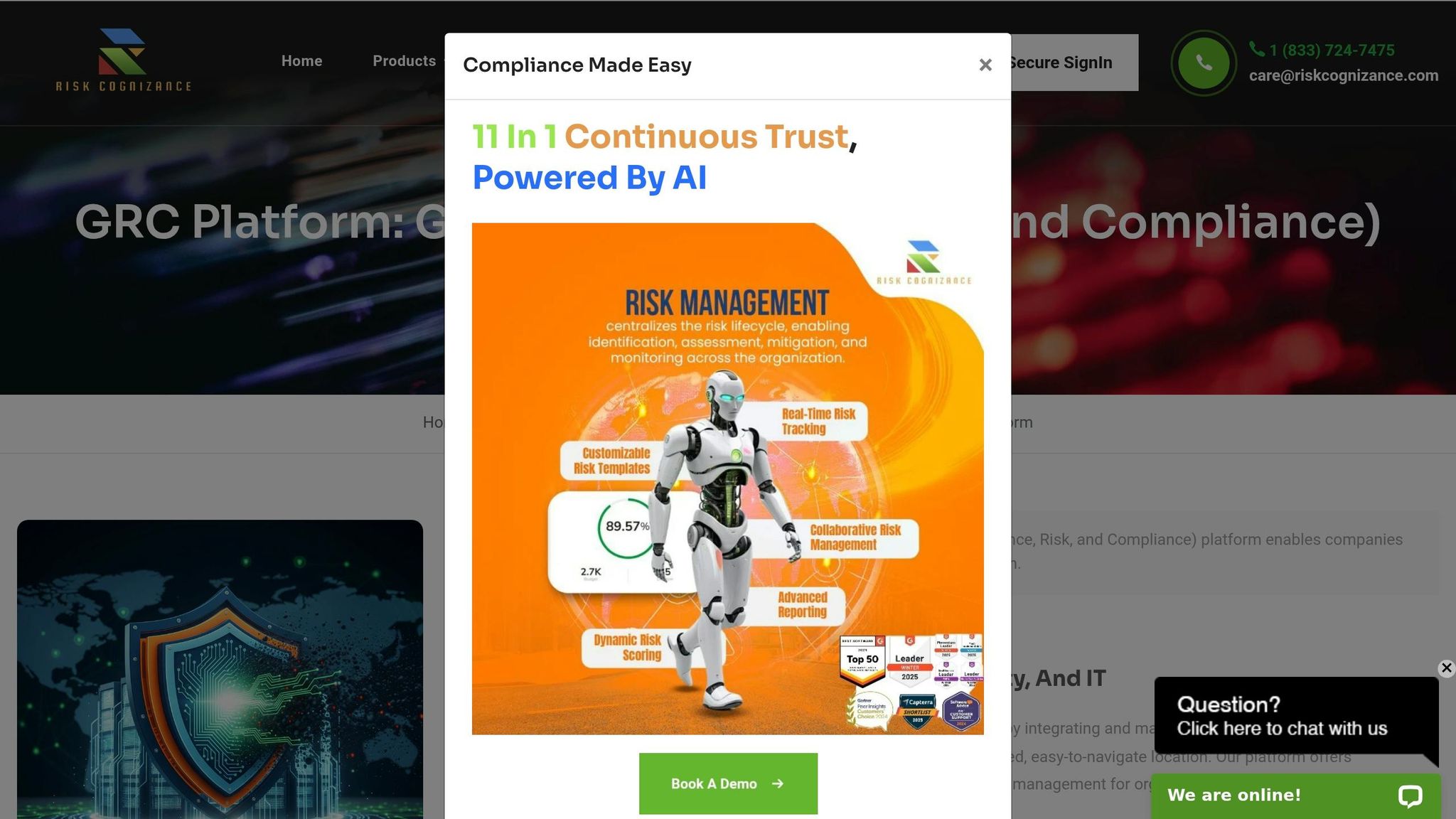
Risk Cognizance takes a unified approach to managing multi-framework compliance, integrating seven key GRC (Governance, Risk, and Compliance) functions into a single platform. These include Enterprise Risk Management, Third-Party Risk Management, and Attack Surface Management. This streamlined setup allows compliance teams to oversee risks across the entire organization, from internal controls to vendor relationships and external vulnerabilities [55].
One of its standout features is the AI Framework Crosswalking tool. This feature identifies overlapping controls across frameworks like SOC 2, ISO 27001, HIPAA, NIST, GDPR, and CMMC. By ensuring that a control for one standard also satisfies the requirements for others, it cuts down on redundant work. Users have reported some impressive results: a 72% reduction in manual compliance tracking and up to a 65% improvement in audit readiness within the first year of implementation [54].
The platform's AI Automated Assessments module further simplifies compliance by continuously scanning internal controls, significantly reducing the time and effort needed for audit preparation. With access to over 250 integrated applications and full API compatibility, Risk Cognizance pulls data seamlessly from across your tech ecosystem [55].
Its single-pane-of-glass dashboards transform complex GRC data into clear visual summaries, including risk scores and audit-readiness insights. Predictive analytics help identify potential compliance risks in advance, while agentic AI automates up to 80% of routine tasks, such as syncing risks and testing controls across multiple entities [55]. These features not only simplify reporting but also deliver tangible benefits, as highlighted in user case studies.
Organizations using Risk Cognizance have automated more than 20,000 workflows, resulting in annual savings of over $250,000 through automation alone [54]. The platform also enjoys high praise from users, earning a 4.9 to 5.0-star rating on Gartner Peer Insights. Customers frequently mention its ease of deployment and strong support as key advantages [55].
Platform Comparison Table
This table provides an overview of how various platforms handle AI reporting, support multiple frameworks, and benefit from ISMS Copilot's features to enhance compliance workflows.
| Platform | AI Reporting Features | Multi-Framework Support | How ISMS Copilot Enhances It |
|---|---|---|---|
| Hyperproof | Automated evidence collection, compliance dashboards | Broad (SOC 2, ISO 27001, HIPAA, NIST, and more) | Drafts audit-ready policies and fills documentation gaps |
| MetricStream | Predictive risk analytics, AI-driven insights | Enterprise-grade, wide regulatory coverage | Adds deep framework-specific guidance for implementers |
| Riskonnect | Risk quantification, automated reporting workflows | Strong enterprise multi-framework mapping (automatic alignment of controls across standards) | Accelerates policy drafting and gap analysis |
| OneTrust | Privacy-focused AI reporting, real-time dashboards | GDPR, CCPA, ISO 27001, and 100+ frameworks | Supplements with ISO 27001 and NIS 2 implementation guidance |
| RSA Archer | Configurable reporting, risk scoring | Broad, enterprise-focused | Provides AI-assisted policy writing for complex control sets |
| Diligent HighBond | Board-ready analytics, audit management reporting | Governance and audit-focused frameworks | Bridges the gap between audit findings and actionable policy updates |
| NAVEX | Ethics and compliance reporting, incident analytics | Regulatory compliance, code of conduct frameworks | Adds technical security framework coverage (ISO 27001, DORA, SOC 2) |
| LogicManager | Risk-based reporting, cause-and-effect analytics | Cross-industry framework support | Speeds up documentation and control narrative drafting |
| SAP GRC | Integrated ERP risk reporting, access risk analytics | SAP ecosystem + regulatory frameworks | Extends coverage to information security standards outside SAP's core |
| Risk Cognizance | AI Framework Crosswalking (identifying overlapping controls across standards), predictive analytics, single-pane dashboards | SOC 2, ISO 27001, HIPAA, NIST, GDPR, CMMC, and more | Handles the "last mile" - drafting policies and answering vendor questionnaires |
While these platforms excel at aggregating risk data and offering reporting tools, the process of drafting policies often falls to the user. This is where ISMS Copilot steps in to simplify the workload. As the team behind ISMS Copilot explains:
"Our AI doesn't search the whole internet. It only uses our own library of real-world compliance knowledge." [2]
Unlike general-purpose AI tools that rely on open data sources, ISMS Copilot is tailored specifically for Governance, Risk, and Compliance (GRC) tasks. It supports 69+ frameworks across 19 jurisdictions [2] and delivers structured, audit-ready content instead of unstructured text. For teams already relying on any of the platforms listed above, ISMS Copilot manages the heavy lifting of drafting policies and performing gap analysis - tasks that are typically manual and time-consuming.
This comparison underscores how ISMS Copilot complements these platforms by streamlining compliance processes and filling critical gaps.
Conclusion
AI-powered GRC reporting tools have changed reporting efficiency by introducing real-time dashboards, automated evidence tagging, and cross-framework mapping. These advancements have slashed manual work by 80–95% and reduced reporting timelines from days to mere moments [3]. That’s a massive leap forward in how organizations manage compliance reporting.
However, even with these technological strides, drafting key compliance documents remains a labor-intensive task. The platforms discussed in this article each offer unique strengths, whether it's enterprise-grade risk analytics, privacy-centric reporting, or governance dashboards tailored for boardrooms. Yet, they all share a common limitation: the lack of automation for document drafting. Policies, control narratives, gap analyses, and vendor questionnaires still demand significant manual effort - unless you leverage a tool built specifically for this purpose.
This is where ISMS Copilot steps in. It simplifies documentation by automating tasks like drafting policies and gap analyses. As the creators explain:
"ISMS Copilot is designed to augment consultants, not replace them. It handles repetitive documentation tasks so you can focus on strategic advice and client relationships." [56]
What sets ISMS Copilot apart is its reliance on a curated library of compliance knowledge, rather than generic data from the open internet. By automating routine tasks, it allows professionals to dedicate their energy to strategic decision-making. Pricing starts at $0, with paid tiers ranging from $20/month to $200/month for teams managing larger workloads [2]. For those already using the platforms mentioned earlier, ISMS Copilot takes over time-consuming documentation, freeing you to focus on the decisions that truly make an impact.
FAQs
::: faq
What does “AI reporting” mean in a GRC platform?
AI reporting within a GRC platform takes the hassle out of manual data handling by automating tasks like data aggregation, analysis, and report creation. It provides real-time insights into compliance by pulling live data directly from governance modules and risk management systems.
This means audit-ready reports, charts, and assessments can be generated quickly and with precision. Not only that, but AI tools can pinpoint compliance gaps, recommend solutions, and produce polished, professional reports - such as SOC 2 updates - without delay. It’s a smarter, faster way to stay on top of compliance requirements. :::
::: faq
How do I choose a GRC tool if I need multiple frameworks?
When selecting a GRC tool to handle multiple frameworks, focus on tools that offer native cross-framework control mapping. This feature allows you to test a single control and use the same evidence across frameworks such as ISO 27001, SOC 2, and NIST, saving time and effort.
It’s a good idea to request a live demo to see how well the tool handles mapping. Additionally, prioritize platforms that include automated evidence collection and streamlined workflows. AI-driven solutions like ISMS Copilot are particularly useful, providing tailored support for managing compliance across more than 50 frameworks with ease. :::
::: faq
Can ISMS Copilot draft audit-ready policies from my controls?
ISMS Copilot leverages generative AI to craft audit-ready policies tailored to your specific controls and regulatory needs. Built with compliance in mind, it delivers accurate, framework-aligned documentation in just minutes. Whether you need policies, procedures, or other critical documents, this tool simplifies your workflow while keeping you aligned with stringent security standards. :::
Related Posts
NIS2 does not bind your company. Your national law does.
Directive (EU) 2022/2555 addresses Member States, not undertakings. The fines, the reporting clocks and the authority you answer to are written in national law, and those laws arrived on twenty-seven different calendars.
The internal audit that never finds anything
ISO 19011 changed edition in May 2026. The failure mode it exists to prevent did not: the internal audit that has, by drift, stopped disagreeing with management.
Under NIS2, "important" is not a lighter security tier
Teams read the important label as NIS2-lite and scope their controls down. The security measures in Article 21 are the same either way; the tier changes supervision, some enforcement tools, and the floor on the national fine maximum.